
HackUnion Engineering Journal
Events & Experiences
6 min read
What Nobody Tells You About Organizing Technology Events
An attendee experiences a few hours, talks, workshops, networking, demos. An organizer experiences everything that had to happen for those hours to exist.

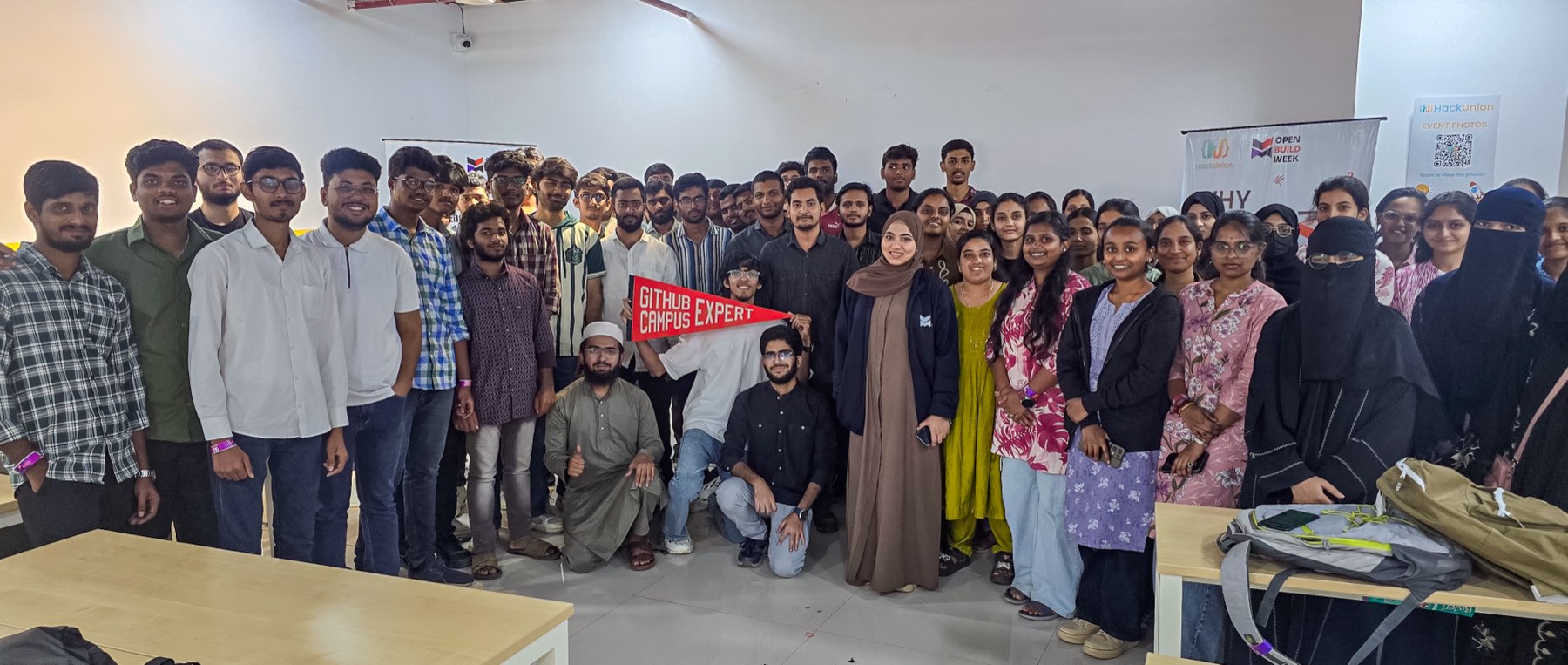
An attendee walks into a technology event and sees a few hours. A stage, a schedule, some talks, maybe a workshop, a demo table, people mingling with coffee in hand. If it goes well, it looks effortless, like it was always going to happen exactly this way.
I’ve been on the other side of that enough times to know it was never going to happen exactly this way. What the attendee sees is the outcome of a hundred small decisions, most of them made with incomplete information, several of them made in the last 48 hours before the event, and at least a few of them made because something already went wrong and there wasn’t time to do it the “right” way.
That gap, between the few hours someone experiences and everything that had to happen before those hours existed, is what I want to actually talk about.
The Work Before the Work
Getting a college to say yes to hosting something is its own negotiation, usually involving people who have their own priorities, their own calendar constraints, and their own version of what the event should look like that may not match yours. Venues have to be walked through, sometimes literally, to figure out if the space you imagined in your head actually works for the number of people you’re expecting.
Speakers and technology partners are a different kind of coordination. People are generous with their time, but generous people are also busy people, and busy people’s schedules change. I’ve had speakers confirm and then need to reschedule with days to spare. I’ve had partnerships that looked settled shift right before an event because something on their end changed that had nothing to do with us.
None of that is a complaint. It’s just accurate. Organizing an event means being the person who absorbs all of that uncertainty so that, by the time someone walks through the door, none of it is visible to them anymore.
Volunteers, Registrations, and the Unglamorous Middle
Volunteers are where a lot of events actually succeed or fail, and it took me a while to fully appreciate that. The people checking registrations, directing people to rooms, handling the small logistics that nobody notices unless they go wrong, that’s not a minor role. It’s the difference between an event that feels organized and one that feels chaotic, and it depends entirely on people who are usually unpaid and rarely thanked as much as they should be.
Registrations look simple from the outside, a form, a headcount. In practice, the number of people who register is never the number of people who show up, and figuring out how much to plan for that gap, every single time, is closer to guesswork than a science. Promotion is the same kind of quietly difficult work, getting the right message in front of the right people without it feeling like noise, across group chats, colleges, and communities that don’t all respond to the same kind of message.
When Things Go Wrong, Because They Do
Every event I’ve run has had something go wrong. A speaker running late. A technical setup that didn’t behave the way it did in testing. A room that turned out to be smaller than what was promised. The specific problem changes every time; the fact that there is a problem doesn’t.
What organizing has taught me, more than anything else, is how to make a decision with incomplete information and move on from it. There usually isn’t time to get more information. You make the best call you can with what you have, you own it, and you adjust the next thing based on what you just learned. That’s a different skill from technical skill, and I don’t think enough people talk about how much of running a community actually comes down to that instead.
What Happens After Everyone Leaves
The part almost nobody sees is what happens after the room empties. The follow-up messages. The feedback that’s more useful when it’s critical than when it’s kind. Figuring out what actually landed versus what only felt like it landed in the moment. Deciding what to change before the next one.
This is also where I’ve had to be honest with myself about what “success” actually means for an event. It’s tempting to measure it by how many people showed up, because that’s the easiest number to point to. But I’ve run smaller sessions that mattered more than some of the bigger ones, because someone in the room met a person they later built something with, or asked their first real question to an industry professional, or left a GitHub Copilot Dev Days session curious about open source in a way they weren’t before it started.
Those outcomes don’t show up in a headcount. A crowded room with no one continuing to build afterward isn’t a success by my definition, even if it photographs well.
What This Has Taught Me About Leading Something
Running campus events, OpenBuild Week, and the recurring parts of HackUnion has taught me that leadership, in this context, mostly looks like absorbing uncertainty on other people’s behalf and communicating clearly enough that they don’t have to carry it too. It’s taught me that consistency matters more than any single big moment, the people who keep showing up are the ones who trust that the next thing will actually happen, because the last several things did.
It’s also taught me that I can’t do this by holding everything myself. Every event that ran well had people other than me making real decisions, not just following instructions. The events that felt fragile were usually the ones where too much still depended on me personally being in the room.
I don’t think I’ve mastered any of this. I still make decisions I second-guess afterward. I still occasionally over-plan the wrong details and under-plan the ones that end up mattering. That’s part of what organizing actually is, not a skill you finish learning, but one you keep re-learning, event after event.
Why I Keep Doing It
The reason I keep organizing these, despite the unglamorous parts, comes back to the same thing every time. A talk can inform someone. But a well-run event, one where people actually talk to each other, get stuck on something together, or meet someone outside their usual circle, can change what someone thinks is possible for them to build. That shift is quiet and hard to measure, and it’s also the entire reason HackUnion exists as more than a series of events. Everything I’ve described here, the coordination, the volunteers, the last-minute decisions, the follow-up nobody sees, is the invisible cost of creating a handful of moments where that shift might happen for someone. I’ve come to think that cost is worth paying, even on the days it doesn’t feel like it.