HackUnion Engineering Journal
Community
7 min read
Why HackUnion Is Building a Builder-First Community
Information about technology has never been more available. Hands-on experience with it hasn't kept pace. This is the gap a builder-first community is meant to sit in.

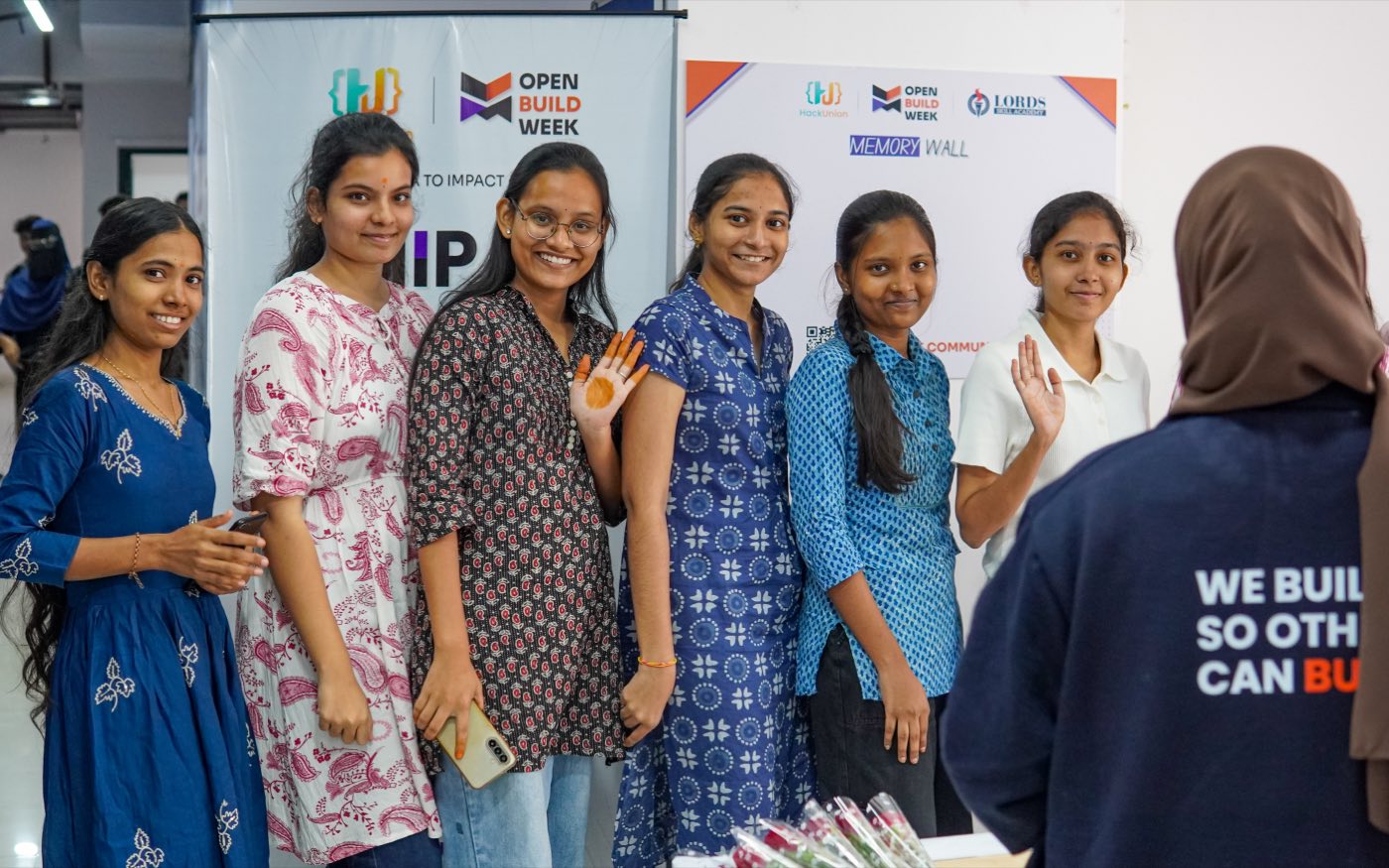
Here’s a question worth sitting with: what would technology communities look like if people were expected to participate rather than simply attend?
Most events, by default, are built around a simple sequence - attend, listen, leave. You show up, someone more experienced talks, you take notes or don’t, and then you go home with information you may or may not act on. This isn’t a flawed format. It’s just a limited one. It’s built for transferring information, not for producing work.
There’s a different sequence that’s harder to design for, but more valuable when it happens: build, collaborate, share, learn, ship. It starts from doing rather than listening, and everything else - the learning, the feedback, the connections - happens as a byproduct of that doing. This is the sequence a builder-first community is trying to create more often.
The Access Paradox
Something strange has happened to early-career developers and students over the past several years. They have more access to technical information than any generation before them - free courses, documentation, open-source codebases, AI tools that can explain almost anything on demand. And yet, a lot of them still struggle to point to something they’ve actually built.
This isn’t a contradiction so much as a predictable outcome. Information and experience are different things, and one doesn’t automatically produce the other. You can watch a hundred videos on how to build a web app and still freeze the first time you open an empty project folder, because the videos taught you what the steps look like, not what it feels like to make decisions when nothing in front of you is a multiple-choice question.
Tutorials are structured to remove ambiguity. Real building is mostly ambiguity - what should this actually do, what’s out of scope, why isn’t this working, who do I ask. That gap between “I’ve watched this be done” and “I’ve done this” is exactly where a lot of learning quietly stalls out.
Passive Learning Isn’t the Problem - Stopping There Is
To be clear, none of this is an argument against courses, lectures, conferences, or colleges. Structured, passive learning is genuinely useful. It builds vocabulary, gives context, and shows people what’s possible before they’ve earned the intuition to figure it out themselves. Nobody should skip the fundamentals because just build something sounds more exciting.
The issue isn’t that passive learning exists. It’s that for a lot of people, it’s the only layer available. They complete a course, get a certificate, finish a tutorial series - and then stop, because there’s no obvious next step that involves doing something with what they just learned. The certificate becomes the finish line instead of a checkpoint.
Event culture has a similar pattern. A talk or a workshop is often the entire experience - you attend, you absorb, and then the event ends and so does the momentum. There’s rarely a built-in next step that says: now go build something with this, with people, in front of others, and get feedback on it.
That missing layer - between I learned something and I can prove I can use it - is where a builder-first approach is meant to sit.
What Proof of Work Actually Means
There’s a phrase that’s become common in developer and open-source circles: proof of work. Not in the blockchain sense - in the more literal sense of having something you can point to that demonstrates you can actually do the thing, rather than just describe it.
A certificate says you completed a course. A project says you built something. A GitHub commit history says you’ve been showing up and contributing, even in small ways. A hackathon submission says you and a team could ship something functional under real time pressure. These forms of evidence carry more weight - to employers, to collaborators, and honestly, to the builder themselves - because they’re harder to fake and they come with scar tissue. You remember the bug that took four hours to find in a way you never remember a slide from a lecture.
This is part of why building, collaborating, and shipping matter more than passive attendance for anyone trying to actually grow: they produce something durable. A talk you attended six months ago is mostly gone from memory. A project you built, even a small one, is still there - you can open the repo, you can explain the decisions, you can point to it.
Collaboration and Feedback Are Where the Real Learning Happens
Building alone teaches you something. Building with other people, and getting feedback on what you’ve made, teaches you considerably more - and it’s the piece that’s hardest to get outside of a real community.
Feedback from someone slightly ahead of you - a mentor, a more experienced developer, an industry professional who’s shipped things in production - does something a tutorial can’t. It’s specific to your work, not generic advice aimed at everyone. It tells you not just what’s wrong, but why it matters, and what a more experienced person would have done differently and why.
Collaboration adds another layer on top of that. Working with people who think differently than you - a designer paired with a backend developer, a student paired with someone with five years of industry experience - surfaces gaps you didn’t know you had, because someone else notices what you’ve stopped seeing. This kind of exchange is difficult to manufacture through content alone. It needs a room, a shared deadline, and people who are willing to build alongside each other.
Open source is one of the more accessible ways to get this experience on an ongoing basis, rather than only during a single event. Contributing to an existing project puts your code in front of real maintainers and real reviewers, with real standards - not a simulated exercise, an actual codebase other people depend on. That kind of feedback, even when it’s a rejected pull request or a requested change, is worth more than most tutorials, because it comes from contact with something real.
What Builder-First Means in Practice
Stripped of any slogan, builder-first means designing a community around a specific set of opportunities, rather than around content delivery. In practical terms, that means prioritizing:
- Opportunities to build - not just hear about building, but actually sit down and make something, even if it’s small or rough.
- Opportunities to meet collaborators - people to build with, not just people to watch.
- Opportunities to get feedback - from mentors, peers, and industry professionals who’ve been further down the same road.
- Opportunities to share unfinished work - because waiting until something is done often means it never gets shared at all.
- Opportunities to learn from people ahead of you - not through a one-way lecture, but through direct interaction, questions, and conversation.
- Opportunities to contribute - to open-source projects, to community initiatives, to something ongoing that outlasts a single event.
This is roughly what shows up across HackUnion’s different formats - campus programs that meet students where they already are, hackathons that compress building into an intense, collaborative window, OpenBuild Week and developer events like GitHub Copilot Dev Days that give more experienced builders room to go deeper, and open-source initiatives that give people a way to keep contributing after any single event ends. None of these formats are trying to replace what a lecture, a course, or a college does well. They’re trying to occupy the layer above it - the one where learning turns into action, and action gets tested against real feedback.
The Layer That’s Missing, Not the Layer That’s Wrong
None of this is a criticism of conferences, workshops, or educational institutions. They do something valuable, and a builder-first community depends on them - you can’t build meaningfully without some baseline of knowledge, and a lot of that baseline still comes from structured, passive learning.
The argument isn’t that attending is wrong. It’s that attending, on its own, is incomplete. There’s a natural next step that a lot of people never get access to: a place where what they just learned gets tested against a real project, real collaborators, and real feedback - where the sequence extends past leave into build, collaborate, share, learn, ship.
That’s the layer a builder-first community is trying to add. Not a replacement for how people currently learn technology, but a continuation of it - one where the measure of progress isn’t how much you’ve listened to, but what you’ve actually made, and who you made it with.